 TECHNICAL NEWS · DURAG
DURAG flame monitoring: A vital link in coal-fired boiler protection
Light in a furnace does not prove that the burner being supervised is alight. Reliable protection requires detection of the intended flame and verifiable signals throughout equipment life. This technical overview uses official DURAG information and focuses on coal-fired power plants.
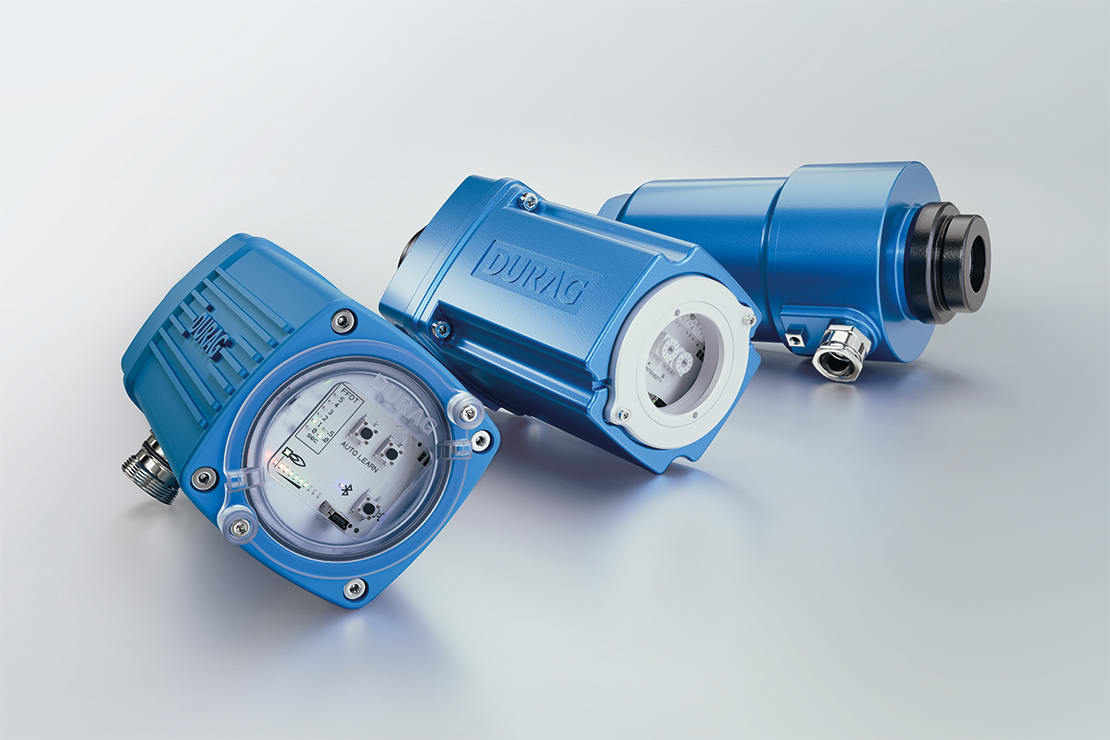
D-LX Flame Supervisor product image: DURAG GROUP; not a SuperMRO project. DURAG GROUP
Quick terminology
| Term | Explanation |
|---|---|
| Flame scanner / monitor | Detects and evaluates flame presence. |
| UV / IR | Ultraviolet / infrared radiation bands. |
| Selectivity | Discrimination of the target flame from other burners or background. |
| BMS / FSSS | Burner management / furnace safeguard supervision; plant-specific terminology and logic. |
| FFDT | Device flame-failure detection time, not the total fuel-isolation response. |
| SIL / fail-safe | Safety integrity level / safe fault response defined in device documentation. |
| Purge air | Air protecting and cleaning the optical path, installation-dependent. |
Why flame monitoring protects the boiler
Continued fuel admission after flame loss can accumulate unburned fuel and create a hazard on subsequent ignition. A monitor determines flame presence; burner management and furnace protection execute the designed response. A Flame ON signal must represent the intended flame, rather than general furnace brightness. [1]
From flame to protective action
Status / data → operating supervision
The multi-burner coal-boiler challenge
Adjacent flames, changing load and dust obscuring the sightline can complicate detection. These are survey considerations, not claims about faults at all plants. Distinguish main coal burners from oil/gas start-up and pilot burners. Depending on the model, optical monitoring evaluates spectral radiation intensity and its fluctuation. Sighting, sensor selection and thresholds determine discrimination. [1][3]
Relevant DURAG product families
D-LX Flame Supervisor combines sensing and processing. D-LX 1xxx offers manual settings; D-LX 2xxx adds filtering, Auto Learn and Flame Companion tools depending on version. Confirm UV/IR, interfaces and options by exact model. Auto Learn assists setup but does not replace commissioning tests. [2]
D-LX 201/721 remains relevant to installed-equipment surveys; a successor is available. Separate optical sensors and control units such as D-UG 660 are another architecture. Suitable fiber optics may address tilting burners, heat, vibration or access constraints. Furnace cameras and video/thermography add operating information; they do not automatically replace protective flame signals. [2][3][4][5]
Signals and functional safety
Flame contacts and ready/fault status are integrated into the designed protective system. Analog intensity and digital diagnostics are not automatic substitutes for its safety signal path. [2]
Suitable DURAG configurations support safety chains up to SIL 3. Device certification alone does not establish the SIL of the complete plant function: architecture, integration, safety documentation and testing also matter. Select FFDT against protection requirements and total response time, not simply to suppress flame-loss alarms.
Replacement and retrofit requirements
Ageing devices, difficult spare-parts supply, insufficient discrimination under new operating modes and limited diagnostics may justify review. Record model, spectrum, supply, contacts, analog signals, wiring, adapters, sighting, purge air and temperatures. Manufacturer claims that some adapters and cables can be reused require location-specific verification. [2][6]
Acceptance should verify target-burner discrimination, flame-loss and device-fault responses, adjacent-burner influence and approved load/fuel modes. Qualified specialists must perform setup and interlock testing under plant procedures and manufacturer documentation.
Applications across SuperMRO industries
Coal-fired power is the focus. Related applications include cement kilns/calciners, steel reheating and preheating furnaces, refinery process heaters and industrial boilers. Each has different fuels, sightlines and protection requirements. Verify hazardous-area certification against the selected variant. [2]
SuperMRO perspective: verify reliability
A sound scope links boiler/burner records, equipment selection, outage planning, integration and acceptance criteria. SuperMRO aims to clarify needs and coordinate appropriate expertise for each scope.
Industrial Trust starts with small signals that are correct—and responsibility for verifying them before operation.