
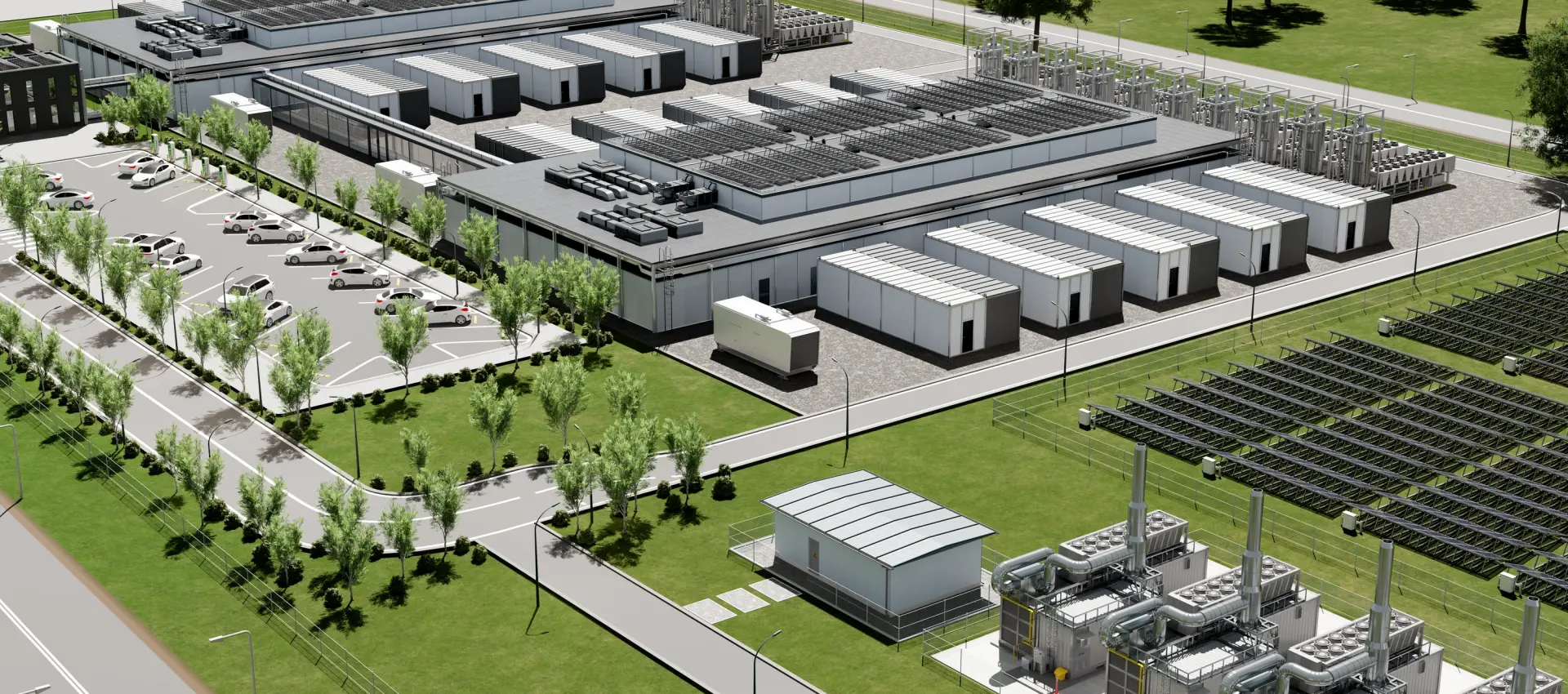
 WEIDMÜLLER · TELECOM INFRASTRUCTURE
Weidmüller: Connectivity, Power and Infrastructure Monitoring for Telecommunications
From BTS sites and telecom shelters to POPs and data centers, Weidmüller’s portfolio supports organized wiring, protected power, infrastructure networking and auxiliary-system monitoring.
Product/application illustrations published by Weidmüller. © Weidmüller. Weidmüller · Data Center
Reliable infrastructure behind every connection
Telecom services depend on control power, cabinet wiring, surge protection, alarms and cooling as well as transmission equipment. Based in Detmold, Germany, Weidmüller develops connectivity, electronics and automation products for these infrastructure layers. Its Data Center page directly addresses data centers; the BTS, POP and shelter scenarios below are SuperMRO’s proposed applications of the portfolio.
1. Wiring and distribution with Klippon® Connect
Terminal blocks and distribution blocks organize power, signals and protective earth. Clear circuit grouping, marking, accessories and test access simplify maintenance across many cabinets. SNAP IN uses prepared spring contacts with visual and audible connection indication; suitable variants accept flexible stripped conductors without ferrules. Select the precise terminal for wire size, current, voltage, connection method and installation conditions.
2. DC power for controls and auxiliary devices
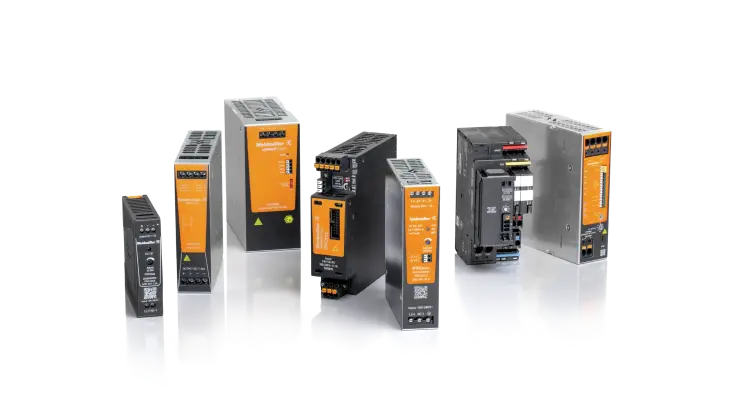
PROtop, PROmax, PROeco and DC/DC options address different power requirements. PROtop offers features including integrated ORing MOSFET and optional communication modules depending on configuration. Proposed loads include controllers, sensors and auxiliary networking. For telecom −48 V systems, verify the real battery charge/discharge range, polarity, isolation and earthing. A nominal 48 V label alone does not establish compatibility with a −48 V bus; confirm each input, output and load requirement.
3. Redundancy, DC UPS and selective load protection
Redundancy addresses loss of a supply branch; DC UPS bridges a defined interruption. The portfolio includes redundancy/diode modules, DURAeco/DURAmax DC UPS and maxGUARD/topGUARD electronic load monitoring. A proposed shelter design separates alarms, auxiliary communications and sensors into protected branches to help localize faults. Calculate battery capacity, temperature and runtime for the actual load. Control-level 24 V backup and a high-power site UPS require separate sizing.
4. VARITECTOR for power, signals and data
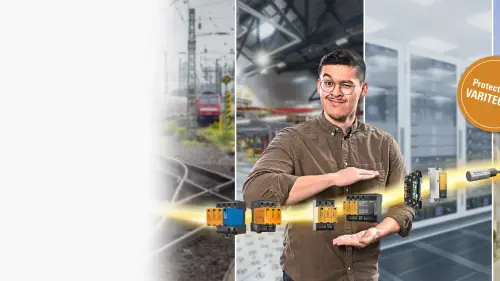
VARITECTOR covers power, instrumentation/control and data interfaces, including suitable RS485/RS232 and Ethernet CAT.6 PoE+ options. Outdoor-site protection should consider power and signal paths together with bonding and earthing. Specify continuous operating voltage, protection performance, interface, speed, connectors and location. RF/coax protection must be verified separately; a single SPD does not constitute a complete lightning-protection design.
5. Industrial Ethernet for infrastructure networks
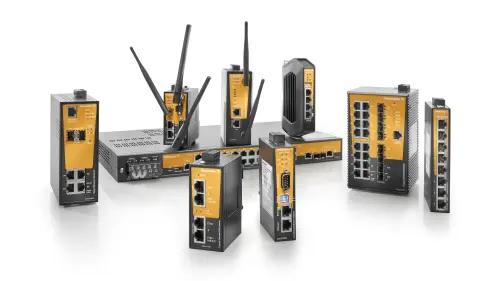
Switches, routers, WLAN and u-link remote access can support OT links between controllers, meters, cooling cabinets and monitoring devices. Managed features, copper/fiber ports, PoE and redundancy depend on model. A POP may aggregate auxiliary alarms and energy data through such a network. Separate this management scope from service traffic and define access rights. Industrial Ethernet products are not automatically substitutes for carrier core routers, optical transmission or radio infrastructure.
6. Energy, power quality and residual-current monitoring
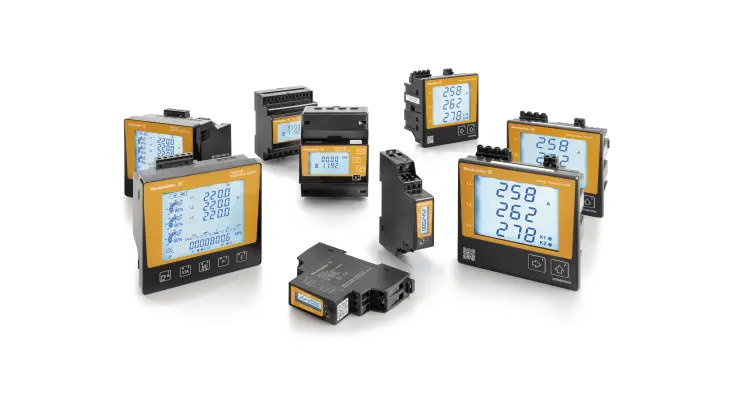
Meters, analyzers, loggers, current transformers and software support different measurement tasks. Weidmüller’s data-center portfolio addresses energy flow, power quality and residual current. Proposed telecom applications include separately measuring cooling and auxiliary branches to reveal changing consumption. Data-center distribution measurements support load allocation and operational review. Select measurement class, protocols and transformers for the task. PUE requires correctly bounded facility and IT energy data, not a single meter reading.
7. u-mation for alarms and auxiliary control
u-control, u-remote and u-view provide control, I/O and visualization. Modular u-remote offers IP20/IP67 choices and diagnostics by product; controllers process local logic and panels support operation. Proposed signals include loss of power, cabinet doors, water leakage and cooling status through appropriate sensors/interfaces. Agree I/O mapping, protocols and behavior during communication failure. BMS, DCIM and NMS integration requires verification for the selected products.
8. Software and maintenance data
ResMa® records and monitors energy flows; PROCON-WEB supports visualization, while compatible gateways/edge devices collect field data. Dashboards can expose a growing load, recurring supply faults or increased cooling consumption after service. Specify sampling, time zones, units, thresholds and response ownership. Software integration, licensing, storage and security belong in the actual scope.
9. Priorities by customer type
Operators and towercos may prioritize standardized wiring, protection and remote alarms. Integrators and panel builders may focus on BOMs, accessories, wiring drawings, marking and assembly checks. POP/edge teams may prioritize control power, OT networking and energy data; data-center operators can combine power monitoring and auxiliary automation. O&M teams can start with recurring faults and missing diagnostics. Each needs acceptance criteria suited to its facilities.
10. A reference shelter architecture
At the electrical layer, compatible supplies/converters feed separately protected auxiliary loads; terminals organize power, signals and PE. Coordinated SPDs protect selected paths. I/O and meters feed a controller/gateway; Industrial Ethernet carries management data. Dashboards present status, trends and actionable alarms. This is a survey framework, not a universally certified site design. Pilot power loss, network failure and a branch fault before replication.
11. Implement from evidence and measure outcomes
Collect electrical drawings, real DC voltage ranges, loads, backup requirements, environmental conditions, I/O, protocols and existing management systems. Develop a manufacturer-code BOM and validate one representative site. Measure wiring time, fault localization, required backup runtime, data completeness, alarm response and consumption by load group. Expand after documented testing rather than assuming a universal saving or availability figure.
SuperMRO: matching requirements to practical solutions
SuperMRO introduces Weidmüller’s portfolio around power, connectivity and infrastructure-management needs. Existing conditions and operational goals should lead to a clear product list, specifications and supply scope. Correct product selection and coordination between components underpin maintainable, scalable solutions for BTS sites, shelters, POPs and data centers.